
Le jalon de 60 millions de kilomètres de BEDEO confirme les avantages de la modernisation pour les flottes alors que la technologie des moteurs intégrés prend de l’ampleur

• BEDEO a calculé que ses fourgons électrifiés ont parcouru collectivement 60 millions de kilomètres à travers l’Europe depuis la création de l’entreprise.

• Agréé par Stellantis, BEDEO convertit et homologue les VUL grand segment de Peugeot/Citroën/Opel/Vauxhall à l’électrique depuis 2019, et est désormais autorisé à continuer à proposer aux flottes des solutions de modernisation électrifiées des VUL grand segment de Stellantis sous l’égide de BEDEO. Offre Reborn Electric, dans les variantes BE et RE

• Les modèles BE uniquement électriques sont capables d’une autonomie allant jusqu’à 364 km WLTP (selon les spécifications) et le RE-100 récemment lancé a une autonomie électrique de 117 km avec un prolongateur d’autonomie de 600 km.

• Les conversions BEDEO Reborn Electric utilisent des moteurs dans les roues de la société du groupe Protean Electric< /strong>, un leader mondial qui a réalisé des millions de kilomètres de tests et de développement, soulignés par sa propre validation de conception exclusive.

• Les avantages de la modernisation pour les utilisateurs de la flotte comprennent la réduction des émissions et des économies de coûts, y compris la possibilité de conserver les aménagements de chargement arrière existants, souvent coûteux.

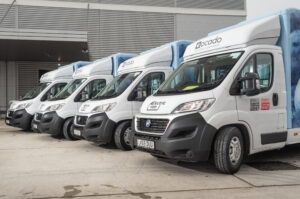
• Les utilisateurs de la flotte BEDEO incluent DHL, DPD, Ocado, Migros, Aras-Kargo et TNT/Fedex

Farnham, le 24 janvier 2024. En tant qu’organisation pionnière dans le secteur de la mobilité électrique, BEDEO continue de mener la révolution des transports en confirmant que ses fourgons électrifiés ont effectué 60 millions de kilomètres de livraisons à travers l’Europe depuis 2009. Propulsés et soutenus par ses Solutions électroniques exclusives et exclusives, comprenant la technologie de moteur-roue (IWM), des onduleurs et des blocs-batteries, les ensembles de véhicules utilitaires légers électriques (eLCV) de BEDEO sont développés et fabriqués en interne selon les normes de production OEM approuvées.

RE100 Charging
Bedeo now has have official approval from Stellantis to offer the Reborn Electric retrofit solutions on the automakers’ large LCVs (3.5-4.5t)

S’établissant comme partenaire privilégié de plus de quarante clients de premier ordre dans les domaines de la logistique, du commerce électronique et de la gestion des déchets, le succès de BEDEO est encore souligné par des partenariats stratégiques avec des acteurs clés du secteur tels que DHL, Ocado et Stellantis. BEDEO a développé une coopération continue avec le groupe Stellantis depuis 2019, fournissant et assemblant des transmissions électriques pour sa grande famille de VUL (PTAC : 3,5-4,5t). Stellantis a récemment également approuvé les versions BE et RE, ouvrant ainsi le marché du retrofit à la solution IWM.

En ce qui concerne la prochaine génération d’objectifs de transformation de flotte et de décarbonation, BEDEO se concentre sur des solutions de rénovation qui convertissent les fourgons diesel existants pour les rendre entièrement électriques ou hybrides grâce à son offre de rénovation électrique Reborn. Reborn Electric peut offrir de nombreux avantages aux propriétaires de flotte, notamment une réduction du coût total de possession, une réduction des émissions d’échappement, une réduction des émissions de carbone au niveau de la fabrication du véhicule, ainsi que la possibilité de conserver l’équipement d’origine du véhicule.

Disponibles sous forme purement électrique, les modèles BE peuvent être équipés d’une batterie de 37 kWh, 75 kWh ou 110 kWh, qui offrent respectivement aux conducteurs une autonomie WLTP de 117 km, 248 km ou 364 km. Alors que le prolongateur d’autonomie RE-100 récemment introduit conserve le moteur diesel d’origine et ajoute une batterie de 37 kWh pour fournir 117 km d’autonomie électrique et 600 km grâce à son prolongateur d’autonomie. Le RE-100 permet aux flottes de se déplacer dans les villes en mode électrique uniquement et d’utiliser le moteur diesel d’origine (souvent conforme à la norme Euro 6) pour se déplacer vers et depuis les dépôts en dehors des villes.

Les conversions innovantes Reborn Electric de BEDEO ne sont rendues possibles que grâce à une technologie exclusive de moteur dans la roue, développée et fabriquée par la société du groupe BEDEO, Protean Electric. Le leader mondial de la technologie des moteurs intégrés aux roues dispose d’un programme exclusif et complet de validation de conception, combinant toutes les législations pertinentes, les normes OEM et les exigences spécifiques liées au groupe motopropulseur, à la suspension, à la haute tension, aux composants électroniques et aux freins. Le développement et la fabrication sont conformes aux normes ISO26262, ISO9001, ISO16949 et ISO14001, avec plus de 300 brevets, soulignant sa conception de pointe au monde.

Fondée en 2009 par Osman Boyner, BEDEO (anciennement BD Auto) est à la pointe de la mobilité électrique depuis sa création, spécialisée dans la production et la fourniture de VLE électriques. Parlant de cette étape importante, Boyner a déclaré :

Osman Headshot #1
Osman Boyner, BEDEO Founder and CEO

« Atteindre 60 millions de kilomètres témoigne de la fiabilité et de la robustesse de nos technologies et solutions électroniques [de BEDEO], fabriquées et détenues en interne. Notre engagement en faveur de la mobilité durable nous pousse à innover continuellement et nous proposons désormais des solutions pratiques aux flottes et aux entreprises qui cherchent à faire la transition vers des véhicules hybrides ou électriques sans avoir besoin de les remplacer par un tout nouveau véhicule. Nos clients bénéficient également du maintien d’installations coûteuses et chronophages qu’ils ont déjà réalisées, telles que des unités de réfrigération ou des aménagements sur mesure, ce qui constitue un énorme avantage lorsque la disponibilité des véhicules est si importante dans les livraisons du dernier kilomètre.

Développant ses technologies exclusives pour aider les flottes dans leur mission de décarbonation, BEDEO est l’une des rares entreprises à détenir ses propres solutions d’électrification propriétaires, certifiées OEM et fiables de cette envergure ; et ce depuis plus d’une décennie. Travaillant sur une présence mondiale, BEDEO exploite sa R&D et son siège social au Royaume-Uni avec une fabrication entreprise en Turquie et en Chine.

BEDEO peut équiper les solutions Reborn Electric d’une large gamme de grands fourgons commerciaux, notamment le Citroën Jumper, le Fiat Ducato, le Peugeot Boxer et le Vauxhall/Opel Movano (marque selon le marché), avec l’intention d’étendre la solution à d’autres grands fourgons. Au-delà de l’automobile, BEDEO étend également activement sa présence sur les marchés maritime et aéronautique.

Remarque : Toutes les marques, logos et noms de marque sont la propriété de leurs propriétaires respectifs. Tous les noms d’entreprises, de produits et de services utilisés le sont uniquement à des fins d’identification. L’utilisation de ces noms, marques et marques n’implique pas leur approbation.

– Prend fin –

À propos de BEDEO

BEDEO (anciennement BD Auto) s’est imposé, ainsi que les sociétés de son groupe, comme l’un des fournisseurs de technologies d’électrification de véhicules les plus novateurs, transformateurs et fiables au monde.

Fondée en 2009 par Osman Boyner, la société a son siège à Farnham, au Royaume-Uni, et fabrique ses produits en Turquie et en Chine. La vision de BEDEO est de décarboner l’industrie des véhicules utilitaires légers en utilisant ses solutions d’électrification exclusives et fabriquées en interne, y compris, mais sans s’y limiter : sa technologie de moteur dans la roue (IWM), son onduleur, sa batterie et son câblage.

Aujourd’hui, le groupe BEDEO, composé de BEDEO et Protean Electric, détient collectivement plus de 300 brevets et références de production OEM en matière de sécurité, de production et d’homologation. En se concentrant sur la prochaine génération de solutions de décarbonation, le groupe BEDEO continue de développer la propriété intellectuelle technologique pour ouvrir la voie à un avenir plus propre et plus connecté.

Approuvé par le principal groupe OEM Stellantis, BEDEO peut équiper les solutions Reborn Electric d’une large gamme de grands fourgons commerciaux, notamment le Citroën Jumper, le Fiat Ducato, le Peugeot Boxer et le Vauxhall / Opel Movano (marque selon le marché), avec l’intention d’être un fournisseur de solutions pour tous les grands fourgons.

L’approche transformatrice de BEDEO et sa rapidité de mise sur le marché inégalée en ont également fait le partenaire de choix de plus de quarante clients de premier ordre dans les domaines de la logistique, du commerce électronique, de l’épicerie et de la vente au détail de produits alimentaires en ligne et de la gestion des déchets urbains, notamment Aras Kargo, DHL, DPD. , Migros, Ocado et TNT/FedEx entre autres.

En mettant l’accent sur un impact radical sur la décarbonation dans les centres-villes et sur l’accélération de la transition globale vers l’électrification des flottes, BEDEO a récemment introduit une solution de modernisation innovante et avancée (nommée Reborn Electric), convertissant les fourgons diesel existants en fourgons électriques ou en autonomie étendue grâce à la technologie IWM. résoudre les problèmes d’anxiété d’autonomie et les problèmes de faibles émissions en une seule solution.

Engagé en faveur de la mobilité durable, BEDEO se développe activement sur les marchés maritimes et aéronautiques.

Pour plus d’informations, visitez bedeo.tech.

Contact médias
Hannah Burgess
hannah@hannahburgesspr.com
+44 (0) 7730 570975

BEDEO, innovateur mondial en technologie automobile, accueille Joachim Drees au sein de son conseil consultatif

L’ancien PDG de MAN SE et MAN Truck & Bus SE rejoint le conseil consultatif de BEDEO, renforçant ainsi l’engagement de l’entreprise à façonner l’avenir du transport électrifié.
La nomination de Joachim Drees intervient alors que BEDEO renforce son engagement en faveur de la décarbonation dans le secteur des transports
Drees possède une vaste expertise et expérience dans les secteurs de l’automobile et des véhicules électriques (VE) et a dirigé d’importants projets de restructuration et stratégiques, démontrant sa polyvalence et son engagement à favoriser l’excellence opérationnelle.
Le Conseil consultatif comprend Thierry Bolloré, récemment nommé, aux côtés du Dr Herbert Demel
BEDEO a récemment célébré une étape importante avec ses fourgons électriques dépassant une distance collective de 60 millions de kilomètres à travers l’Europe depuis la création de l’entreprise.

Joachim Drees
BEDEO Welcomes Joachim Drees to Advisory Board

Farnham, le 1er février 2024 :

BEDEO, entreprise leader mondial à la pointe de la technologie d’électrification des véhicules ainsi que de la production et de la fourniture de véhicules utilitaires légers électriques (VLC), confirme la nomination de Joachim Drees au sein de son distingué conseil consultatif. Drees, un cadre supérieur chevronné avec une illustre carrière dans les secteurs de l’automobile, des biens d’équipement B2B et du capital-investissement, apporte une richesse d’expérience pour propulser BEDEO davantage alors qu’il avance avec ses solutions électroniques exclusives et conçues en interne.

Donnant la priorité à l’impératif mondial de la décarbonation et à la recherche en cours, la profonde compréhension de Drees des subtilités du secteur des véhicules utilitaires, de la chaîne d’approvisionnement et des besoins des flottes, associée à son expérience éprouvée dans la conduite de grandes entreprises vers le succès, fait de lui un ajout clé au sein de BEDEO. Conseil consultatif en pleine croissance. En tant qu’ancien PDG de MAN SE et MAN Truck & Bus SE (anciennement MAN Truck & Bus AG), occupant simultanément un poste au conseil d’administration de Traton SE, le leadership visionnaire de Drees au cours de cette période a solidifié sa réputation de force de transformation au sein de l’industrie. .

À l’heure où ses solutions électroniques exclusives continuent de gagner du terrain et d’être reconnues auprès des grandes flottes et des équipementiers, le conseil consultatif de BEDEO s’agrandit pour garantir que l’entreprise reste à la pointe de la technologie et de la production de mobilité électrifiée. Drees rejoint d’autres membres renommés du conseil d’administration, dont le Dr Herbert Demel et Thierry Bolloré. Grâce à leur expérience combinée (Demel et Bolloré) dans divers postes de direction OEM et Tier One, y compris la construction d’usines et d’installations de fabrication clés en main, associée à l’approche visionnaire de la Drees en matière de décarbonation dans le secteur des véhicules utilitaires ; le conseil consultatif de BEDEO est sur le point de conduire l’entreprise vers sa prochaine phase de succès.

Le fondateur et PDG de BEDEO, Osman Boyner, a exprimé son enthousiasme concernant la nomination de Drees et a déclaré : « Accueillir Joachim au sein de notre conseil consultatif est un moment important pour BEDEO. Sa vaste expérience, son sens stratégique et sa passion pour les technologies transformatrices s’alignent parfaitement avec notre mission de redéfinir le “

Joachim Drees a ajouté : « La décarbonisation des transports restera l’un – sinon le – sujet le plus important de cette décennie. Au cours de mes années à la tête d’une grande entreprise de véhicules utilitaires, qui a traversé sa propre transition, il est clair que je vois les avantages de l’électrification et de l’utilisation de solutions de groupe motopropulseur intelligentes pour atteindre l’objectif de zéro émission nette sans affecter l’espace de chargement. J’ai hâte de collaborer avec l’équipe de BEDEO, Herbert, Thierry et le reste du conseil d’administration pour renforcer son offre et mettre en œuvre mes connaissances afin d’assurer la prochaine phase de croissance de BEDEO.

Drees rejoint le conseil consultatif de BEDEO une semaine après que l’entreprise a confirmé que ses fourgons électriques avaient effectué 60 millions de kilomètres de livraisons à travers l’Europe depuis la création de l’entreprise en 2009.

Remarque : Toutes les marques, logos et noms de marque sont la propriété de leurs propriétaires respectifs. Tous les noms d’entreprises, de produits et de services utilisés le sont uniquement à des fins d’identification. L’utilisation de ces noms, marques et marques n’implique pas leur approbation.

À propos de BEDEO

BEDEO (anciennement BD Auto) s’est imposé, ainsi que les sociétés de son groupe, comme l’un des fournisseurs de technologies d’électrification de véhicules les plus novateurs, transformateurs et fiables au monde.

Fondée en 2009 par Osman Boyner, la société a son siège à Farnham, au Royaume-Uni, et fabrique ses produits en Turquie et en Chine. La vision de BEDEO est de décarboner l’industrie des véhicules utilitaires légers en utilisant ses solutions d’électrification exclusives et fabriquées en interne, y compris, mais sans s’y limiter : sa technologie de moteur dans la roue (IWM), son onduleur, sa batterie et son câblage.

Aujourd’hui, le groupe BEDEO, composé de BEDEO et Protean Electric, détient collectivement plus de 300 brevets et références de production OEM en matière de sécurité, de production et d’homologation. En se concentrant sur la prochaine génération de solutions de décarbonation, le groupe BEDEO continue de développer la propriété intellectuelle technologique pour ouvrir la voie à un avenir plus propre et plus connecté.

L’approche transformatrice de BEDEO et sa rapidité de mise sur le marché inégalée en ont également fait le partenaire de choix de plus de quarante clients de premier ordre dans les domaines de la logistique, du commerce électronique, de l’épicerie et de la vente au détail de produits alimentaires en ligne et de la gestion des déchets urbains, notamment Aras-Kargo, DHL, DPD, Migros, Ocado et TNT/FedEx entre autres.

En mettant l’accent sur un impact radical sur la décarbonation dans les centres-villes et sur l’accélération de la transition globale vers l’électrification des flottes, BEDEO a récemment introduit une solution de modernisation innovante et avancée (nommée Reborn Electric), convertissant les fourgons diesel existants en fourgons électriques ou en autonomie étendue grâce à la technologie IWM. résoudre les problèmes d’anxiété d’autonomie et les problèmes de faibles émissions en une seule solution.

Approuvé par le principal groupe OEM Stellantis, BEDEO peut adapter les solutions Reborn Electric à une large gamme de produits.

de grands fourgons utilitaires (PTAC : 3,5-4,5 t) dont le Citroën Jumper, le Fiat Ducato, le Peugeot Boxer et le Vauxhall/Opel Movano (marque selon marché), avec l’intention d’être un apporteur de solutions pour tous les grands fourgons.

Engagé en faveur de la mobilité durable, BEDEO se développe activement sur les marchés maritimes et aéronautiques.

Pour plus d’informations, visitez bedeo.tech.

Contact médias

Hannah Burgess
hannah@hannahburgesspr.com

+44 (0) 7730 570975

Global Automotive Technology Innovator BEDEO Welcomes Joachim Drees to Advisory Board

  • Former CEO of MAN SE and MAN Truck & Bus SE joins BEDEO’s Advisory Board, bolstering the company’s dedication to shaping the future of electrified transportation
  • Joachim Drees’ appointment comes as BEDEO reinforces its commitment to targeting decarbonisation in the transportation industry
  • Drees possesses extensive expertise and experience in the automotive and electric vehicle (EV) industries and has spearheaded major restructuring and strategic projects, showcasing his versatility and commitment to driving operational excellence
  • Advisory Board includes recently appointed Thierry Bolloré alongside Dr. Herbert Demel
  • BEDEO recently celebrated a significant milestone with its electric vans surpassing a collective distance of 60 million kilometres across Europe since the company’s inception
Joachim Drees
BEDEO Welcomes Joachim Drees to Advisory Board

Farnham, 1 February 2024:

BEDEO, a world-leading company at the forefront of vehicle electrification technology and the production and supply of electric light commercial vehicles (eLCV), confirms the appointment of Joachim Drees to its distinguished Advisory Board. Drees, a seasoned C-suite executive with an illustrious career in the automotive, B2B capital goods and private equity sectors, brings a wealth of experience to further propel BEDEO as it charges ahead with its trailblazing in-house designed, proprietary e-solutions.

Prioritising the global imperative of decarbonisation and ongoing research, Drees’ profound understanding of the intricacies of the commercial vehicle sector, supply chain and needs of fleets, coupled with his proven track record of steering major corporations towards success, makes him a key addition to BEDEO’s growing Advisory Board. As previous CEO of MAN SE and MAN Truck & Bus SE (formerly MAN Truck & Bus AG), concurrently holding a position on the Executive Board of Traton SE, Drees’ visionary leadership during this period solidified his reputation as a transformative force within the industry.

At a time when its proprietary e-solutions continue to gather momentum and recognition with large fleets and OEMs alike, BEDEO’s Advisory Board is expanding to ensure the company stays at the forefront of electrified mobility technology and production. Drees joins other renowned board members including Dr. Herbert Demel and Thierry Bolloré. With their combined (Demel and Bolloré) experience in various senior OEM and Tier One roles, including the building of turn-key plants and manufacturing facilities, paired with Drees’ visionary approach to decarbonisation in the commercial vehicle sector; the BEDEO Advisory Board is poised to lead the company to its next phase of success.  

BEDEO’s Founder and CEO Osman Boyner expressed his enthusiasm about Drees’ appointment and said: “Welcoming Joachim to our Advisory Board is a significant moment for BEDEO. His extensive experience, strategic acumen, and passion for transformative technologies align perfectly with our mission to redefine the automotive and EV landscapes. We look forward to leveraging Joachim’s insights as we continue our pursuit of innovation and sustainability.”

Joachim Drees added: “Decarbonisation in transport will remain one of – if not the – most important topics of this decade. Through my time leading a large commercial vehicle company, which has gone through its own transition, it’s clear to see the benefits of electrification and utilising smart powertrain solutions to get to the net-zero goal without impacting cargo space. I look forward to collaborating with the team at BEDEO, Herbert, Thierry and the rest of the board to strengthen its offering and implement my knowledge to secure its [BEDEO’s] next phase of growth.”

Drees joins the BEDEO Advisory Board within a week of the company confirming that its electric vans had completed 60 million kilometres of deliveries across Europe since the company’s foundation in 2009.

Note: All trademarks, logos and brand names are the property of their respective owners. All company, product and service names used are for identification purposes only. Use of these names, trademarks and brands does not imply endorsement.

About BEDEO

 BEDEO (formerly BD Auto) has established itself, and its group companies, as one of the most trailblazing, transformative and trusted vehicle electrification technology providers globally.

Founded in 2009 by Osman Boyner, the company is headquartered in Farnham, UK, with manufacturing in Turkey and China. BEDEO’s vision is to decarbonise the LCV industry utilising its proprietary, in-house manufactured electrification solutions, including but not limited to: its in-wheel motor (IWM) technology, inverter, battery pack and cabling.

Today, BEDEO Group, which consists of BEDEO and Protean Electric, collectively hold over 300 patents and OEM production credentials in safety, production and homologation. Focusing on the next generation of decarbonisation solutions, BEDEO Group continues to develop technology IP to lead the path for a cleaner, more connected future.

BEDEO’s transformative approach and unmatched time-to-market speed have also made it the partner of choice for over forty blue-chip customers in logistics, e-commerce, online grocery and food retail, and urban waste management including Aras-Kargo, DHL, DPD, Migros, Ocado and TNT / FedEx among others.

With a focus on making a radical impact on decarbonisation in city centres and accelerating the overall transition to fleet electrification, BEDEO recently introduced an innovative and advanced retrofit solution (named Reborn Electric), converting existing diesel vans into electric or range extended using IWM technology, solving range anxiety issues and low-emission concerns in one solution.

Approved by leading OEM group Stellantis, BEDEO can fit Reborn Electric solutions to a wide range of large commercial vans (GVW: 3.5-4.5t) including the Citroën Jumper, Fiat Ducato, the Peugeot Boxer and Vauxhall / Opel Movano (brand depending on market), with the intention to be a solution provider for all large vans.

With a commitment to sustainable mobility, BEDEO is actively expanding into the marine and aviation markets.

For more information, visit bedeo.tech.

Media Contact

Hannah Burgess
hannah@hannahburgesspr.com

+44 (0) 7730 570975

BEDEO’s 60 Million Kilometre Milestone Affirms Retrofitting Benefits for Fleets as In-Wheel Motor Tech Gains Momentum

• BEDEO has calculated that its electrified vans have collectively travelled 60 million kilometres across Europe since the company’s inception

• Approved by Stellantis, BEDEO has been converting and homologating the large-segment LCVs of Peugeot/Citroen/Opel/Vauxhall to electric since 2019, and is now approved to continue offering fleets electrified retrofit solutions of Stellantis’ large-segment-LCVs under BEDEO’s Reborn Electric offering, in BE and RE variants

• Electric-only BE models are capable of up to 364 km WLTP (depending on spec) and the recently launched RE-100 has a 117 km electric range with a 600 km range extender

• BEDEO Reborn Electric conversions utilise in-wheel motors from group company Protean Electric, a world leader that has secured millions of kilometres’ worth of testing and development, underscored by its own proprietary design validation

• Retrofit benefits for fleet users include emissions reduction and cost savings including the ability to retain existing, often costly rear cargo fit outs

• BEDEO fleet users include DHL, DPD, Ocado, Migros, Aras-Kargo and TNT/Fedex

Farnham, 24 January 2024. As a trailblazing organisation in the electric mobility sector, BEDEO continues to lead the charge in revolutionising transportation as it confirms its electrified vans have undertaken 60 million kilometres’ worth of deliveries across Europe since 2009. Powered and underpinned by its owned, proprietary e-solutions, including in-wheel motor (IWM) technology, inverters, and battery packs, BEDEO’s electric light commercial vehicle (eLCV) packages are developed and manufactured in-house to OEM production-approved standards.

RE100 Charging
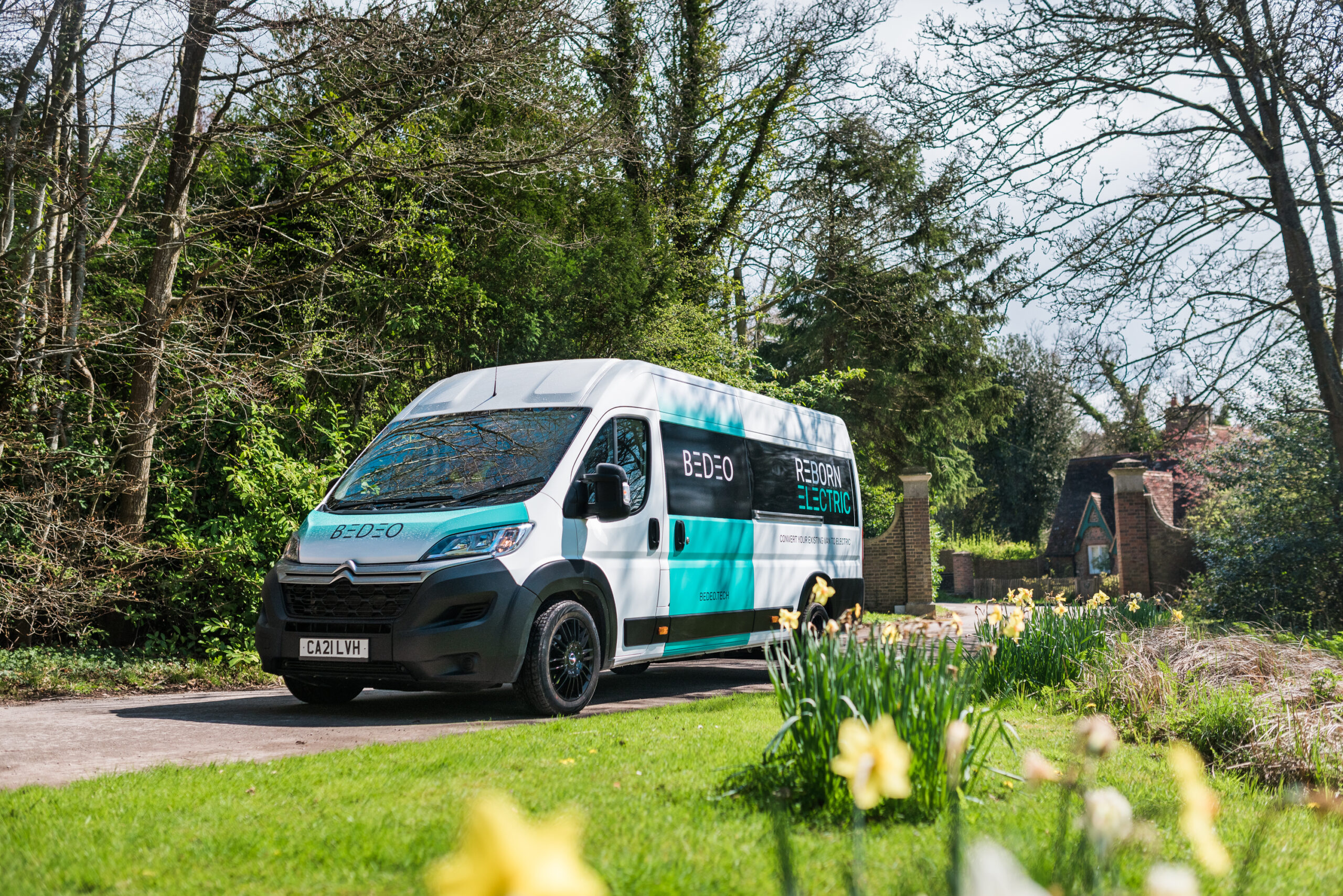
Bedeo now has have official approval from Stellantis to offer the Reborn Electric retrofit solutions on the automakers’ large LCVs (3.5-4.5t)

Establishing itself as a preferred partner for over forty blue-chip customers in logistics, e-commerce and waste management, BEDEO’s success is further underscored by strategic partnerships with key industry players such as DHL, Ocado and Stellantis. BEDEO has developed an ongoing co-operation with the Stellantis group since 2019, supplying and assembling electric drivetrains for its large LCV family (GVW: 3.5-4,5t). Stellantis has recently also approved the BE and RE versions, thus opening the retrofit market to the IWM solution.

Looking to the next generation of fleet transformation and decarbonisation targets, BEDEO is focusing on retrofit solutions that convert existing diesel vans to make them either fully electric or hybrid through its Reborn Electric retrofit offer. Reborn Electric can unlock many benefits for fleet owners including lowering total cost of ownership, a reduction in tailpipe emissions, lowering carbon emissions at a vehicle manufacturing level, plus the ability to retain the original vehicle’s fit out.

Available in pure electric form, the BE models can either be fitted with a 37 kWh, 75 kWh or 110 kWh battery, which provides drivers with 117 km, 248 km or 364 km WLTP range respectively. Whereas the recently introduced range extender RE-100 retains the original diesel engine and adds a 37 kWh battery to provide 117 km of electric range and 600 km through its range extender. The RE-100 provides the ability for fleets to travel in towns and cities on electric-only mode and utilise the original (often Euro 6 standard) diesel engine to drive to and from the out-of-town depots.

BEDEO’s innovative Reborn Electric conversions are only made possible through proprietary in-wheel motor technology, developed and manufactured by BEDEO’s group company Protean Electric. The world leading in-wheel motor technology company has a proprietary and comprehensive design validation program, combining all relevant legislation, OEM standards and specific requirements related to powertrain, suspension, high voltage, electronic components and brakes. The development and manufacturing adhere to ISO26262, ISO9001, ISO16949 and ISO14001 all with over 300 patents, underscoring its world-leading design.

Founded in 2009 by Osman Boyner, BEDEO (formerly known as BD Auto) has been at the forefront of electric mobility since its inception, specialising in the production and supply of eLCVs. Speaking of the momentous milestone, Boyner stated: 

Osman Headshot #1
Osman Boyner, BEDEO Founder and CEO

“Reaching 60 million kilometres is a testament to the reliability and robustness of our in-house manufactured and owned [BEDEO’s] technologies and e-solutions. Our commitment to sustainable mobility drives us to continually innovate and we are now providing practical solutions for fleets and businesses looking to make the transition to hybrid or electric vehicles without needing to replace with a brand new vehicle. Our clients also benefit from keeping costly, and time intensive installations that they’ve already done, such as refrigeration units or bespoke fit outs, which is a huge bonus when vehicle uptime is so important in last mile deliveries.”

Developing its proprietary technologies to help fleets on their mission to decarbonise, BEDEO is one of few companies that holds its own proprietary, OEM-certified and trusted electrification solutions of this scale; and has done so for over a decade. Working on a global footprint BEDEO operates its R&D and headquarters in the UK with manufacturing undertaken in Turkey and China.

BEDEO can fit Reborn Electric solutions to a wide range of large commercial vans including the Citroën Jumper, Fiat Ducato, the Peugeot Boxer and Vauxhall / Opel Movano (brand depending on market), with the intention to extend the solution to other large vans. Beyond automotive, BEDEO is also actively expanding its reach into the marine and aviation markets.

Note: All trademarks, logos and brand names are the property of their respective owners. All company, product and service names used are for identification purposes only. Use of these names, trademarks and brands does not imply endorsement.

– Ends –

About BEDEO

BEDEO (formerly BD Auto) has established itself, and its group companies, as one of the most trailblazing, transformative and trusted vehicle electrification technology providers globally.

Founded in 2009 by Osman Boyner, the company is headquartered in Farnham, UK, with manufacturing in Turkey and China. BEDEO’s vision is to decarbonise the LCV industry utilising its proprietary, in-house manufactured electrification solutions, including but not limited to: its in-wheel motor (IWM) technology, inverter, battery pack and cabling.

Today, BEDEO Group, which consists of BEDEO and Protean Electric, collectively hold over 300 patents and OEM production credentials in safety, production and homologation. Focusing on the next generation of decarbonisation solutions, BEDEO Group continues to develop technology IP to lead the path for a cleaner, more connected future.

Approved by leading OEM group Stellantis, BEDEO can fit Reborn Electric solutions to a wide range of large commercial vans including the Citroën Jumper, Fiat Ducato, the Peugeot Boxer and Vauxhall / Opel Movano (brand depending on market), with the intention to be a solution provider for all large vans.

BEDEO’s transformative approach and unmatched time-to-market speed have also made it the partner of choice for over forty blue-chip customers in logistics, e-commerce, online grocery and food retail, and urban waste management including Aras Kargo, DHL, DPD, Migros, Ocado and TNT / FedEx among others.

With a focus on making a radical impact on decarbonisation in city centres and accelerating the overall transition to fleet electrification, BEDEO recently introduced an innovative and advanced retrofit solution (named Reborn Electric), converting existing diesel vans into electric or range extended using IWM technology, solving range anxiety issues and low-emission concerns in one solution.

With a commitment to sustainable mobility, BEDEO is actively expanding into the marine and aviation markets.

For more information, visit bedeo.tech.

Media Contact
Hannah Burgess
hannah@hannahburgesspr.com
+44 (0) 7730 570975

UK Government Subsidies for Retrofitting Would Accelerate Journey to Decarbonisation

When the Government announced in September 2023 that it was going to delay banning the sale of new petrol and diesel cars and vans for five years to 2035, it was met with mixed feelings in the Fleet community. Whilst billed as a U-turn on its climate commitments by the pro-environment lobby, it brings the UK out of line with the EU’s & OEM’s plans. Industry Fleet commentators suggested that while there was relief in some quarters and some might be pleased about the delay, the majority of vehicle fleet operators would be disappointed at the decision. 

Of fleet operators who were considering new vehicles, more than half (51%) were concerned that the lack of available range with new electric vans would negatively impact operations, and two out of five (40%) said that electric vans were simply too expensive.

Paul Hollick, chair of the Association of Fleet Professionals (AFP) said that the Government should provide more support and ‘not move the goalposts.’  While Mr Hollick acknowledged that ‘serious operational issues’ needed to be tackled, especially when it came to electric vans, the overwhelming feeling within his membership was probably one of ‘irritation’. 

What is interesting about the Prime Minister’s bombshell is the consequences it has had on Fleet Managers looking to transition to an electric fleet. When BEDEO sought the views of 200 named operators of major fleets in the UK and France in early September to see what was preventing them from making the switch, the original deadline was quoted as a contributing factor. Two out of five (40%) said that 2030 ‘was still a long way off’, meaning some would understandably use this as a reason to kick the decision down the road. Given the research was conducted before Mr Sunak’s announcement, that road has suddenly become much longer!

Delay could lead to unintended consequences. Many of the European OEMs are proceeding with the original plan in line with the rest of the European Union and this could put UK customers at risk of being deprioritised for production allocation as we get closer to the deadline. 

This is not scaremongering for there is precedent; it is precisely what happened when the Department for Transport delayed the adoption of EU6 Step E emissions standards subsequently launching a consultation Updating GB Type Approval for Road Vehicles which was published in October this year. While the EU stayed firm on the deadline, insisting all Step D vehicles be registered by the end of 2022, the unintended consequences of the DFT decision were that some UK fleet customers who had ordered step d vehicles saw their builds pushed back by OEMs.  This was to prioritise European orders to ensure these vehicles met the EU deadline leading to delivery delays of many months for some UK fleets, even in some cases having their step D orders cancelled only to be faced with having to re-order step E vehicles at a higher price.  

The lack of urgency to make a change and policy delays are not of course the only reasons. Of fleet operators who were considering new vehicles, more than half (51%) were concerned that the lack of available range with new electric vans would negatively impact operations, and two out of five (40%) said that electric vans were simply too expensive. A similar number (35%) said that even if they were inclined to buy new, the product range was currently too limited. 

This is precisely where retrofitting can fit in, in giving businesses a cost-effective solution that accelerates their journey towards decarbonisation without having to bear all the cost. BEDEO recently launched the RE-100 – an advanced retrofit solution which fits to existing diesel vans to make them both electric (first) and/or diesel at the touch of a button. 

Widely popular and financially supported by public authorities in France but not in the UK, retrofitting adds an electric powertrain to the existing diesel without replacing it, adding a further 70+ miles of electric driving to its range (anything up to 600 miles+) and without compromising load space. It overcomes, in a stroke, a Fleet Manager’s principal barriers to ‘going electric’. It gives them an immediate opportunity to decarbonise, without the full cost of having to buy new electric vans while their existing diesel vans still have plenty of life left in them. 

BEDEO’s RE-100 adds an electric drivetrain to an existing diesel van by way of an in-wheel motor and battery system, addresses fleet managers’ current concerns regarding range, affordability and sustainability, and doesn’t mean replacing a vehicle with a typical 10 – 15-year lifespan. To that end we need Government action. 

BEDEO's RE-100 adds an electric drivetrain to an existing diesel van by way of an in-wheel motor and battery system, addresses fleet managers’ current concerns regarding range, affordability and sustainability.

BEDEO research shows that fleet managers might be more inclined to consider a retrofit solution if there was greater awareness of the solution, and that’s where Government can play its part through incentives: more than half (54%) of respondents had little or even no knowledge of retrofitting, despite the huge benefits it can bring. Awareness levels are much higher in France (65%), where the French Government offers a €9,000 retrofit subsidy; no such subsidy is available in the UK, and that is something that needs to change.

Thierry Bolloré Joins BEDEO Advisory Board as Strategic Advisor

With extensive experience at Renault Group and Jaguar Land Rover (JLR), he brings BEDEO an in-depth knowledge of the automotive industry.

LONDON, U.K. – November 20, 2023 – BEDEO, the global leader in the development and manufacturing of electric In-Wheel-Motors (Protean) and powertrain technology announced that Thierry Bolloré has joined the company’s Advisory Board.

Throughout an illustrious career spanning over 30 years in the automotive industry, Mr. Bolloré has held various senior management positions with multinational Tier 1’s Michelin and Faurecia, prior to joining Renault’s management board in 2012 and being promoted to CEO in 2019. He subsequently was appointed CEO of Jaguar Land Rover (JLR) in 2020.

Thierry Bollore
Thierry Bolloré Joins BEDEO Advisory Board as Strategic Advisor

BEDEO’s Founder and CEO, Osman Boyner: “As an established global business leader with the highest pedigree, I am delighted to welcome Thierry, who brings a wealth of automotive experience, knowledge and network which is highly complementary to the company’s mission to become a global leader in technologies for electrification of transportation.” 

Mr. Thierry Bolloré: “I am pleased to join BEDEO, which in the rapidly evolving area of electrification technology, is one of the few companies with a unique and strong product differentiation. The company is a clear leader in electrification of transport and has an extensive track record, developing and manufacturing high value, cost effective electrification technologies for global OEMs and fleet customers. I am looking forward to sharing my knowledge with the company in support of pursuing the company’s mission in electrification of transportation.”

About BEDEO

BEDEO (formerly known as BD Auto) is an electric vehicle supplier and manufacturer of drivetrain solutions based in Farnham. Founded by Osman Boyner in Turkey in 2009, BEDEO has been focused on the production of pure electric light commercial vehicle models. Vehicles manufactured by BEDEO have driven more than 50 million kilometers across Europe including UK, France, Denmark, The Netherlands and Italy. BEDEO began offering its range of electric vans in the UK in 2017 and began working with UK supermarket Ocado the following year.  In 2019 Groupe PSA (now Stellantis – the third largest automotive manufacturer in the world comprising Peugeot, Citroen, Opel, Vauxhall and Fiat Chrysler) announced it would be supplying and installing BEDEO electric drivetrain solutions to a selection of its light commercial vehicles.  BEDEO recently launched an advanced retrofit solution which fits to existing diesel vans to make them both electric (first) and/or diesel at the touch of a button using innovative in-wheel motor (IWM) technology. / www.bedeo.tech 

Media Contact:
Hannah Burgess
Email: hannah@hannahburgesspr.com
Tel: +44 (0) 7730 570975


BEDEO Research Shows Need for Government Support in Accelerating Demand for Electric Retrofit of Commercial Vans

– France ahead of UK in subsidising the retrofit of diesel vans to electric

– Up to £5.5 billion could be saved in retrofitting rather than replacing existing diesel fleets with new full electric vans

– Fleet managers see range, availability and cost of new electric vans as barriers to adoption

Osman Boyner, BEDEO CEO and Founder, says that adding electric to an existing diesel van by way of an in-wheel motor and battery system would not only save significant money, but also overcome fleet managers’ current concerns regarding range, affordability and sustainability.

One fifth (20%) of fleet managers would choose to retrofit their existing commercial vehicles in the immediate term to decarbonise, without having to bear the full cost of replacement while their vans still have plenty of miles on the clock.

And if all 20% of the UK’s large van fleet (approximately 150,000 vehicles) were to be retrofitted rather than replaced, British businesses could save billions by 2035 according to new research.

They would also, importantly, retain their existing fleet with significant operational upsides as well as addressing the wider sustainability challenge of disposing of vehicles and expensive fit-outs before the end of their useful working lives.

The research for BEDEO, the electric vehicle supplier and manufacturer, sought the views of 200 named operators of major fleets in the UK and France to uncover what strategies they were pursuing towards electrification and their awareness levels of particular options open to them.

Of fleet operators who were considering new vehicles, more than half (51%) were concerned that the lack of available range with new electric vans would negatively impact operations, and two out of five (40%) said that electric vans were simply too expensive. A similar number (35%) said that even if they were inclined to buy new, the product range was currently too limited.

A number [40%] said that the deadline ‘was still a long way off’, causing concern that some would understandably use this as a reason to kick the decision down the road: “This is precisely where retrofitting can fit in,” says BEDEO’s Founder Osman Boyner, “in giving businesses a cost-effective solution that accelerates their journey towards decarbonisation without having to bear all of the cost.”

A new retrofit solution, widely popular and financially supported by public authorities in France but not in the UK, adds an electric powertrain to the existing diesel without replacing it, adding a further 70+ miles of electric driving to its range (anything up to 600 miles+) and without compromising load space.

In terms of the numbers, replacing an existing large diesel van with a new electric would cost the fleet manager an average of £55,000 per vehicle. This rises to £62,500 per vehicle, when the average amount spent (£7,500 according to the research) on each vehicle fit-out (refrigeration units, racking etc) is taken into account.

Replacing 150,000 vehicles with new electric ones (out of a total large van vehicle parc of 750,000 units) would therefore cost businesses £9.38 billion. By comparison, converting each vehicle at a cost of £25,000 would require a total investment of £3.75 billion – saving businesses £5.5 billion.

Even if a residual value of £15,000 for each vehicle sold on was taken into account (£47,500 x 150,000 = c£7.13 bilion), businesses would still be saving c50% of the total cost of ownership by converting rather than buying new.

BEDEO recently launched its RE-100 Range Extender – an advanced retrofit solution which fits to existing diesel vans to make them both electric (first) and/or diesel at the touch of a button.

Osman Boyner says that adding electric to an existing diesel van by way of an in-wheel motor and battery system would not only save significant money, but also overcome fleet managers’ current concerns regarding range, affordability and sustainability. To that end he is calling for Government action:

“Our research shows that more fleet managers (i.e the remaining 80%) might be more inclined to consider a retrofit solution if there was greater awareness and that’s where Government can play its part through incentives: more than half (54%) had little or even no knowledge of retrofitting, despite the huge benefits it can bring in helping businesses transition to an electric future and accelerate their decarbonization strategies.

“Awareness levels were much higher in France (65%),” he continues, “where the French Government offers a €9,000 retrofit subsidy; no such subsidy is available in the UK, and that is something we are looking to change.”

BEDEO recently launched its RE-100 Range Extender – an advanced retrofit solution which fits to existing diesel vans to make them both electric (first) and/or diesel at the touch of a button. It gives vans 117km of electric range to add the existing c600km diesel range, solving range anxiety issues and low-emission concerns in city centres in one solution.

SMMT data to end 2021 had the UK total van fleet at c4.6 million vehicles. This comprises an estimated 750,000 large vans (i.e greater than 3.5t).

The average cost of a new large electric van in the UK is £55,000 (market comparison); the average cost per fit out is £7,500 (BEDEO research).

-ENDS-

Notes to editors:

BEDEO (formerly known as BD Auto) is an electric vehicle supplier and manufacturer of drivetrain solutions based in Farnham. Founded by Osman Boyner in Turkey in 2009, BEDEO has been focused on the production of pure electric light commercial vehicle models. Vehicles manufactured by BEDEO have driven more than 50 million kilometres across Europe including UK, France, Denmark, The Netherlands and Italy. BEDEO began offering its range of electric vans in the UK in 2017, and began working with UK supermarket Ocado the following year. In 2019 Groupe PSA (now Stellantis – the third largest automotive manufacturer in the world comprising Peugeot, Citroen, Opel, Vauxhall and Fiat Chrysler) announced it would be supplying and installing BEDEO electric drivetrain solutions to a selection of its light commercial vehicles.

Media Contact:
Hannah Burgess
Email: hannah@hannahburgesspr.com
Tel: +44 (0) 7730 570975

BEDEO Launches Retrofit Tech That Makes a Diesel Van Electric at the Press of a Button

New solution creates a new sustainable business model for fleet operators

An advanced retrofit solution which fits to existing diesel vans to make them both electric (first) and/or diesel at the touch of a button using innovative in-wheel motor (IWM) technology has been launched by BEDEO, an electric vehicle supplier and manufacturer based in Farnham.

The new RE-100 Range Extender, part of its Reborn Electric range, enables organisations with large fleets of vans, often with major conversions (e.g refrigeration units, bespoke fitouts, minibuses etc), to retain those vehicles for longer while still transitioning to an electric future.

The Reborn Electric range includes the RE-100 range extended option and the BE-100, BE-250 and BE-350 full electric options.

A vehicle fitted with a RE-100 Range Extender is electric first, with 117km of electric range, making it ideal for ‘Last Mile’ deliveries. Its existing diesel mode can be used when needed for longer trips, switching to electric when entering a low-emission zone and densely populated areas to eliminate emissions and accelerate decarbonisation.

At the heart of RE-100 are two in-wheel motors and a battery designed, engineered and manufactured by BEDEO. The in-wheel motors are fitted to the rear axle of the vehicle. The motors are more compact, lighter, efficient and easier to install than an equivalent e-axle and powered by a 37kWh battery. No suspension modifications are required to the front or rear, which means there is no loss of ground clearance and no loss of load space or height.  

BEDEO came to national attention in 2019 manufacturing electric vans for significant players in the ‘Last Mile delivery’ market such as OCADO, DHL and TNT. Founder Osman Boyner says that with the concept of Reborn Electric he is providing a new business model for an industry caught between the twin goals of cost and sustainability. “The traditional model of fleet owners is to invest in new vans,” he explains.  

“But electric vans today don’t meet the needs of the market and even Euro VI diesel vans are still responsible for a disproportionate amount of carbon emissions. With the RE-100 we have created a new category of hybrid that not only meets the needs of the market but also accelerates transport decarbonisation.” 

The RE-100 is a hybrid in as much as it can have two modes of power – electric and diesel – but with the BEDEO technology the vehicle cannot be operated as diesel within controlled low emissions zones, unless in an emergency. Outside of controlled zones the driver is in control and can determine when to stay in electric for a more pleasant driving experience, or switch to diesel for longer distances.  

The ability to retrofit BEDEO’s IWM into an existing vehicle is an entirely new proposition: “BEDEO has leveraged this advanced IWM technology to develop the next generation of retrofit vehicles, unlimited by the constraints of a standard e-axle,” Osman adds. 

Commercial fleet operators face a number of significant challenges in the next few years, not least the uncertainty of a moving government deadline for an all-electric future which makes the RE-100 launch even more important. Osman believes that while switching to an all-electric fleet is desirable, it is also very expensive and wasteful, requiring investment not only in the vehicles themselves, but also the infrastructure to support them. 

Osman Headshot #1
Osman Boyner, BEDEO Founder and CEO

 “While sustainability is, of course, a key driver, the end-to-end sustainability (whole lifecycle) of the vehicle also needs to be taken into account,” he continues. “It cannot be sustainable to replace a vehicle that has not reached the end of its useful working life, neither is it sustainable to replace not only the vehicle, but also the refrigeration units or bespoke fit-out that many of these vehicles have.  

“Retrofitting with electric overcomes these challenges and more, satisfying the need to reduce emissions in our city centres where the majority of the ‘Last Mile’ journeys are required, breathing new life into older vehicles.” 

Today BEDEO can fit Reborn Electric solutions to a wide range of large commercial vans including the Peugeot Boxer, Citroen Jumper, the Fiat Ducato and Vauxhall Movano, with the intention to be a solution provider for all large vans. BEDEO has the capacity to convert hundreds of vehicles at any one time at its sites in Europe. 

Reborn Electric is a range of retrofit solutions that includes the RE-100 range extended option and the BE-100, BE-250 and BE-350 full electric options. 

Notes to editors: 

BEDEO (formerly known as BD Auto) is an electric vehicle supplier and manufacturer of drivetrain solutions based in Farnham. Founded by Osman Boyner in Turkey in 2009, BEDEO has been focused on the production of pure electric light commercial vehicle models. Vehicles manufactured by BEDEO have driven more than 50 million kilometres across Europe including UK, France, Denmark, The Netherlands and Italy. BEDEO began offering its range of electric vans in the UK in 2017, and began working with UK supermarket Ocado the following year.  In 2019 Groupe PSA (now Stellantis – the third largest automotive manufacturer in the world comprising Peugeot, Citroen, Opel, Vauxhall and Fiat Chrysler) announced it would be supplying and installing BEDEO electric drivetrain solutions to a selection of its light commercial vehicles.  

Media Contact:
Hannah Burgess
Email: hannah@hannahburgesspr.com
Tel: +44 (0) 7730 570975

Reducing Harmful Emissions from People Transport and Improving the Customer Experience

Minibuses drive where people are. They are a crucial part of some people’s lives and are especially important for those who may have accessibility needs. They pick people up from populated areas and drop them in populated areas, with all of the associated convenience, but also for combustion engine vehicles, the associated emissions. In the The Netherlands the government has set an ambitious target to transition to zero-emission mobility by 2050.

In addition, an agreement made in April 2022 states all light commercial vehicles in the major municipalities of Amsterdam, Rotterdam, The Hague Eidhoven and Tilburg are required to be emissions-free by 2025, with the rest of the country following by 2030[1].

Willemsen de Koning (WdK) operate a fleet of minibuses providing accessible transport. BEDEO have been working with them to electrify their fleet.


Maximising passenger space, with minimum impact on payload

WdK minibuses needed space for passengers and to be wheelchair-accessible, whilst maintaining the maximum payload of the vehicle. BEDEO vehicles are lighter than many competitors which enables more passenger space and the ability to accommodate mobility aids better than other similar electric vehicles.

In addition to the essential space and weight benefits, electrifying their fleet with BEDEO vehicles enabled WdK a cheaper total cost of ownership, through lower servicing and fuel costs.  The BEDEO electric vans also deliver an improved customer experience and brand image with improved passenger comfort due to the reduced noise, vibration and gear change jolts than a diesel equivalent, especially when in traffic.

Partnering to roll out Willemsen de Koning’s electrified fleet

BEDEO is proud to offer great customer service and support for companies that are electrifying their fleets.  Fortunately, WdK had a great deal of technical knowledge of electric vans, but still faced some challenges around overcoming range anxiety and how to make a large group of their drivers feel comfortable using full electric vehicles.

BEDEO worked with WdK to design and roll-out a comprehensive training programme including how to operate the vehicle, how to load it and the steps to take with the smart interface and notifications in the vehicle. This training, combined with extensive on-the-ground support of the drivers and the fleet managers if issues arose, ensured these challenges were addressed.

Continuing to work together, WdK is still providing BEDEO with important feedback so that continuous improvements can be made as well as consistent support offered. In partnership with WkD, BEDEO continually update a guide to the vehicles, so all new employees at WdK can be kept up to date.

‘Not a taxi company, a people company’

As a business WdK covers more than a hundred million kilometres per year, more than 2,500 times round the Earth.  Their focus on people, planet and profit ensures that wherever they can, they act sustainably and we are proud to support them in their drive to use CO2 neutral vehicles.

[1] The Netherlands permits only clean taxis and rental cars in cities from 2025

Media Contact:
Hannah Burgess
Email: hannah@hannahburgesspr.com
Tel: +44 (0) 7730 570975

The Hidden Cost of Refrigerated Home Deliveries

The boom in convenience and ease of home delivery has resulted in a significant increase in polluting and dangerous emissions from light goods vehicles in the UK, which have risen by at least 65% since 1990 [1]. When refrigerated vans are considered, the figures become even more alarming. CO2 emissions from refrigerated vans are nearly double the government’s target of 147 g/km, while NOX emissions exceed the Euro 6ab limit by more than three times, at 0.125 g/km [2]. As a result, vans have become a major contributor to air pollution in cities, responsible for 14% of NOx emissions from road transport [3].

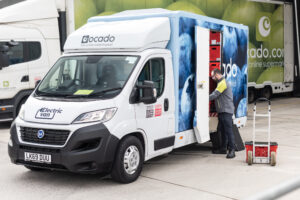
BEDEO has been working with Ocado since 2019 to build electric refrigerated vans, helping them to clean up their fleet and supporting them in deploying cleaner, safer, and better-value electric van technology.

Ocado BEDEO Van

Expanding charging capacity and alleviating range concerns

Ocado initially rolled out BEDEO’s vans on a pilot basis to test the vehicles and charging capacity. It quickly became clear that the vans were performing well, and as more vans were ordered, Ocado expanded their charging capacity. BEDEO supported this process, bringing expert advice and partnerships with charging companies.

Bespoke charging solutions were also developed to meet Ocado’s specific needs. The increased weight from the electric powertrain was counteracted with the addition of innovative solar panels on vans, which supplies power back, ensuring that the BEDEO vans can run the TRU and complete a full delivery shift without charging.

Due to the nature of last-mile delivery, any charging issues that remained were alleviated by the schedule of the day. An average shift for a driver in a city rarely exceeds a 30-mile radius, with most drops occurring in a concentrated area. Even with shifts for the vans that start at 5.30 am and finish at 11 pm, the distance driven is often low, and charging can also occur when the van is restocked between deliveries, making the process seamless.

Working with Ocado to train their drivers

BEDEO’s electric refrigerated vans are a higher weight than a standard van, posing a challenge for Ocado’s delivery drivers – not all drivers had the license needed to drive this weight of vehicle, or the experience of driving an electric van rather than a standard diesel one.

The BEDEO team worked with Ocado to tackle this and encouraged the government to supply a derogation so that drivers could drive a higher weight electric vehicle. Additionally, the five hours of extra training required by the government were added to the Ocado training with BEDEO’s support so that new drivers had the skills to drive the vans.

Most important was making drivers feel confident and well-supported during this change in approach. BEDEO conducted handover training for drivers as standard when supplying vans, as well as going out on shift with some drivers to understand their day-to-day and troubleshoot any issues.

Drivers were quickly converted to the benefits of an electric van – in cities, vans with no vibration, exhaust fumes, or gears create a far more relaxed and comfortable driving experience.

Saving cost and increasing social impact

Ocado vans operate where people live, delivering essential food and supplies right to their front doors.  BEDEO has enabled Ocado to cut its emissions and continue to deliver on its corporate responsibility mission to change the way the world shops for good; to harness the unlimited potential of technology for people and the planet.

In addition, BEDEO electric vans have a lower total cost of ownership than a standard diesel van and are exempt from London’s ULEZ charge of £12.50 per day and congestion charging, enabling Ocado to save up to £7,500 in charges per year per van[4].

By working with BEDEO, Ocado can be confident that they are operating as efficiently as possible as a business on cost, and as effectively as possible environmentally, to protect the communities they serve.


[1] Delivering a Greener Future – Urban Transport Group

[2] Real-world CO2 and NOX emissions from refrigerated vans – National Library of Medicine

[3] Transport & Environment: Vans

[4] GreenFleet – London’s ULEZ marks the moment for EVs

Media Contact:
Hannah Burgess
Email: hannah@hannahburgesspr.com
Tel: +44 (0) 7730 570975